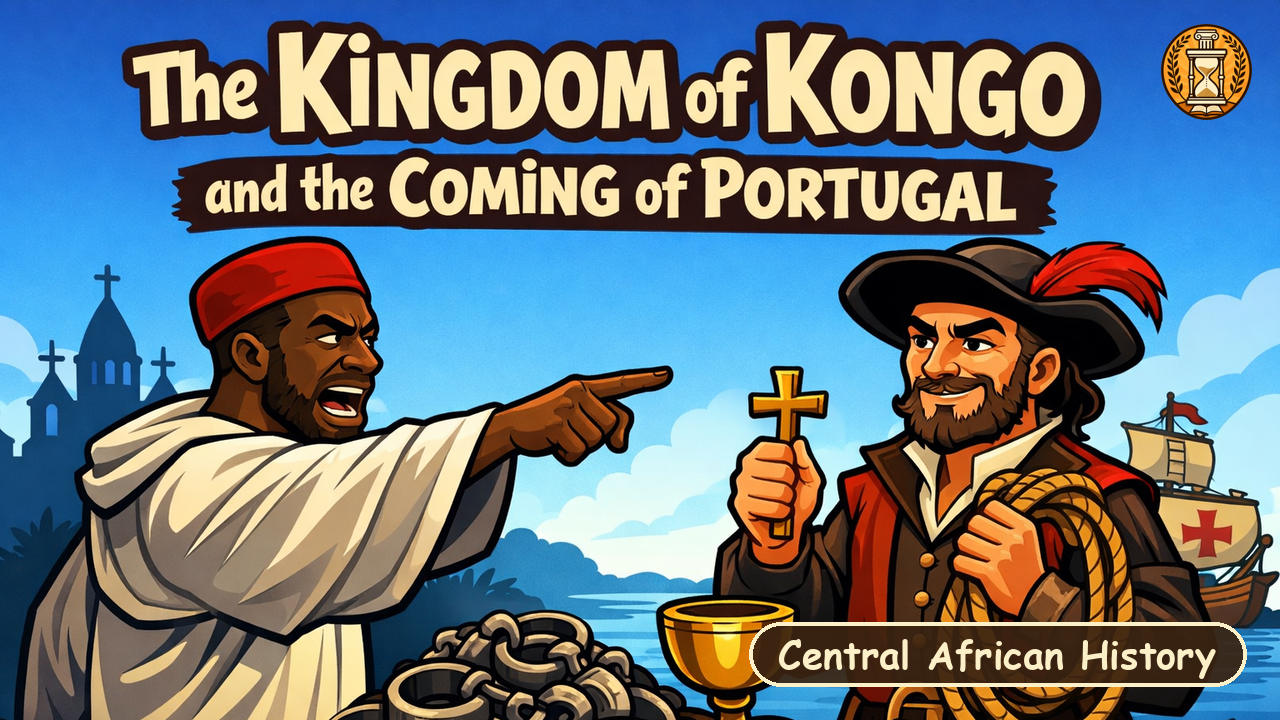
In the late 1400s, Portugal showed up at the mouth of the Congo River like a very confident sales rep with a trunk full of crucifixes and a firm belief that everyone needed both.
The Original “We Come in Peace” (Sort Of)
Let’s set the scene. It’s 1482, and Portuguese explorer Diogo Cão has just sailed into the Congo River. He’s not there to sightsee. He’s there for three things: spices, souls, and a solid trade route. What he finds instead is the Kingdom of Kongo—a highly sophisticated, centrally governed state with a monarch, a noble class, and provincial chiefs who probably had better administrative skills than most of Lisbon’s tax collectors.
King Nzinga a Nkuwu, the man in charge, did what any smart ruler would do when strange guys with big boats and even bigger beards show up: he invited them in for a chat. Diplomatic missions, gift exchanges, and a whole lot of mutual “wow, you guys are interesting” followed. Portugal sent back missionaries, craftsmen, and a steady stream of letters. Kongo sent back ivory, copper, and a growing curiosity about this whole Christianity thing.
The Baptism of João I (Not to Be Confused with a Pop Star)
Here’s where it gets genuinely bizarre. King Nzinga a Nkuwu decides, in 1491, to get baptized. He takes the name João I—presumably because “King Nzinga” was too hard for Portuguese bureaucrats to spell. His wife, the queen, also converted. The royal family went all-in: they built the first stone church in Mbanza Kongo, the capital, and missionaries started settling in like they were opening a chain of spiritual coffee shops.
At first, it looked like a win-win. Kongo got a new religion that connected them to a global network, and Portugal got a Christian ally in Africa. João I even wrote letters to King Manuel I of Portugal, and for a brief, shining moment, it seemed like the Kingdom of Kongo might become the first great Christian African kingdom—a place where the cross and the crown could hold hands and sing Kumbaya.
Spoiler: they did not sing Kumbaya.
The Slave Trade, or How to Ruin a Beautiful Friendship
The problem wasn’t the cross. The problem was the cargo. Portuguese merchants, missionaries, and diplomats were fine with saving souls, but they were also very interested in shipping bodies. The slave trade didn’t just creep into Kongo—it barged in like a relative who overstays their welcome and starts rearranging your furniture.
By the time King Afonso I (Mvemba a Nzinga, João I’s son) took the throne, the situation had soured. Afonso was a devout Christian and a savvy diplomat. He wrote desperate, eloquent letters to Portugal complaining that his kingdom was being drained of its people. He asked for help, for teachers, for doctors—anything to modernize and resist the corrosive influence of the trade.
Portugal’s response? “We hear you, buddy. Anyway, here are more slave traders.” The merchants, backed by the crown, had no interest in stopping. Kongo’s provincial chiefs, seeing a profit opportunity, started selling their own people downriver. It was a slow-motion train wreck, and everyone could see it coming except the ones driving the train.
The Long, Bloody Aftermath
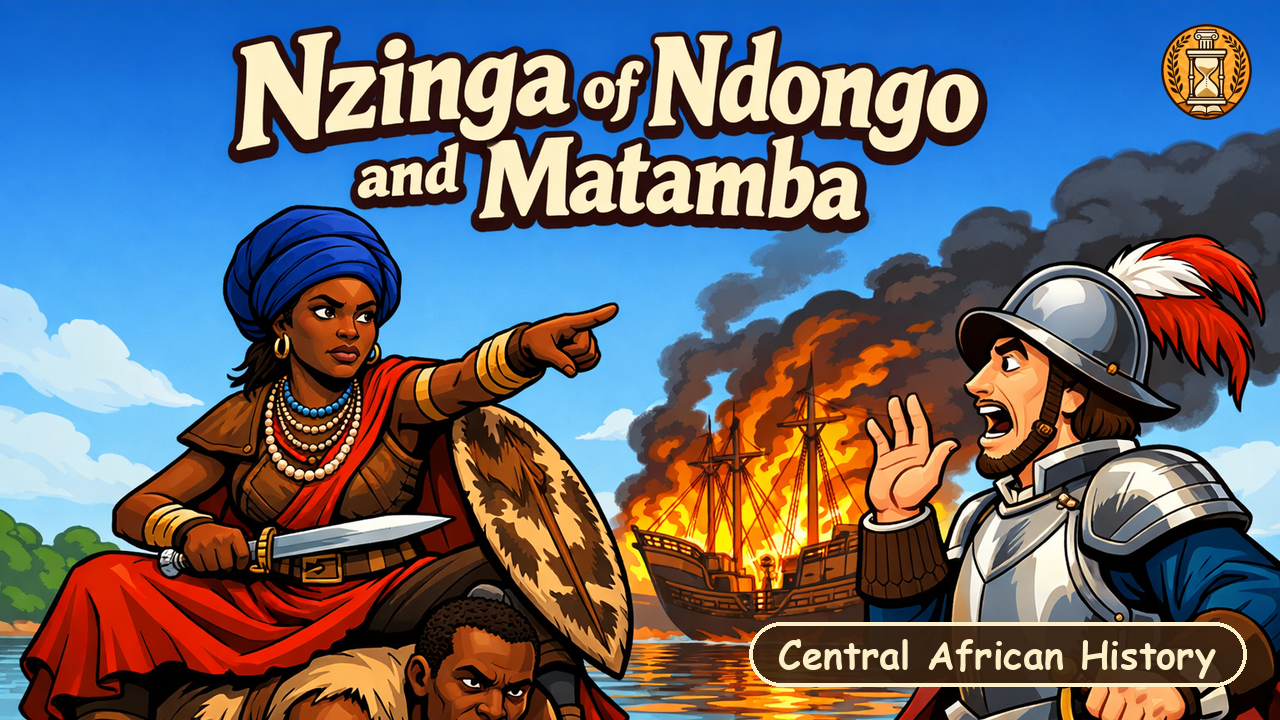
Over the next two centuries, the Kingdom of Kongo tried everything to keep its independence. They played Portugal against rival African states, they allied with Queen Nzinga of Ndongo (who was basically the most formidable political operator of the era), and they even fought open wars. King António I made a final, doomed stand in 1665 against the Portuguese governor of Angola. He lost, and his head was displayed in Luanda as a grim trophy.
The kingdom didn’t disappear overnight, but it fractured. Kongo warlords, Portuguese adventurers, and squabbling nobles turned the once-great state into a patchwork of conflict. The dream of a Christian African kingdom had curdled into a cautionary tale about what happens when faith meets finance without a safety net.
In the end, the Kingdom of Kongo wasn’t conquered by armies alone—it was undone by a relationship that started with a handshake and ended with a leash. The cross was real, but so was the crown, and the crown always knew which side its bread was buttered on.
Closing line: The Kingdom of Kongo gave Portugal its first great African ally, and in return, Portugal gave it a front-row seat to the slave trade. Faith may move mountains, but it rarely out-negotiates a merchant with a ship and a ledger.
Chapters
- 0:00 — Introduction
- 1:09 — First embassy to Portugal
- 1:47 — King Nzinga a Nkuwu baptized
- 2:20 — Afonso I becomes king
- 2:56 — Kongo’s Christian capital
- 3:23 — The Ground
- 3:28 — Kongo’s Christian capital
- 3:40 — Slave trade intensifies
- 3:52 — On the Move
- 3:56 — Slave trade intensifies
- 4:21 — Afonso’s letters to Portugal
- 4:56 — Henrique made bishop
- 5:29 — Kongo’s decline after Afonso
- 5:56 — Jaga invasion
- 6:24 — Portuguese help restore Álvaro I
- 6:43 — Battle of Mbumbi
- 7:13 — Dutch alliance with Kongo
- 7:44 — Battle of Kombi
- 8:22 — Portuguese regain Luanda
- 8:57 — Kongo’s isolation