Somewhere around 4,000 years ago, somebody in Sumer sat down and invented the concept of the epic hero — then immediately gave him a best friend and killed him off, because even the first storyteller knew that’s how you get the audience.
The World’s First Supervillain (With a City to Run)
Gilgamesh is the king of Uruk, and he is, to put it in modern terms, a nightmare landlord. He’s two-thirds god, one-third human, and one hundred percent too much — working his subjects to exhaustion and generally behaving like a man who has never once been told no.
The gods’ solution is beautifully bureaucratic: file a complaint, then manufacture a rival. They create Enkidu, a wild man who lives with the animals and has, presumably, excellent hair. A temple priestess named Shamhat is sent to civilize him, which she does. This is the ancient world’s version of a HR intervention, and it works.
The Buddy Movie Phase
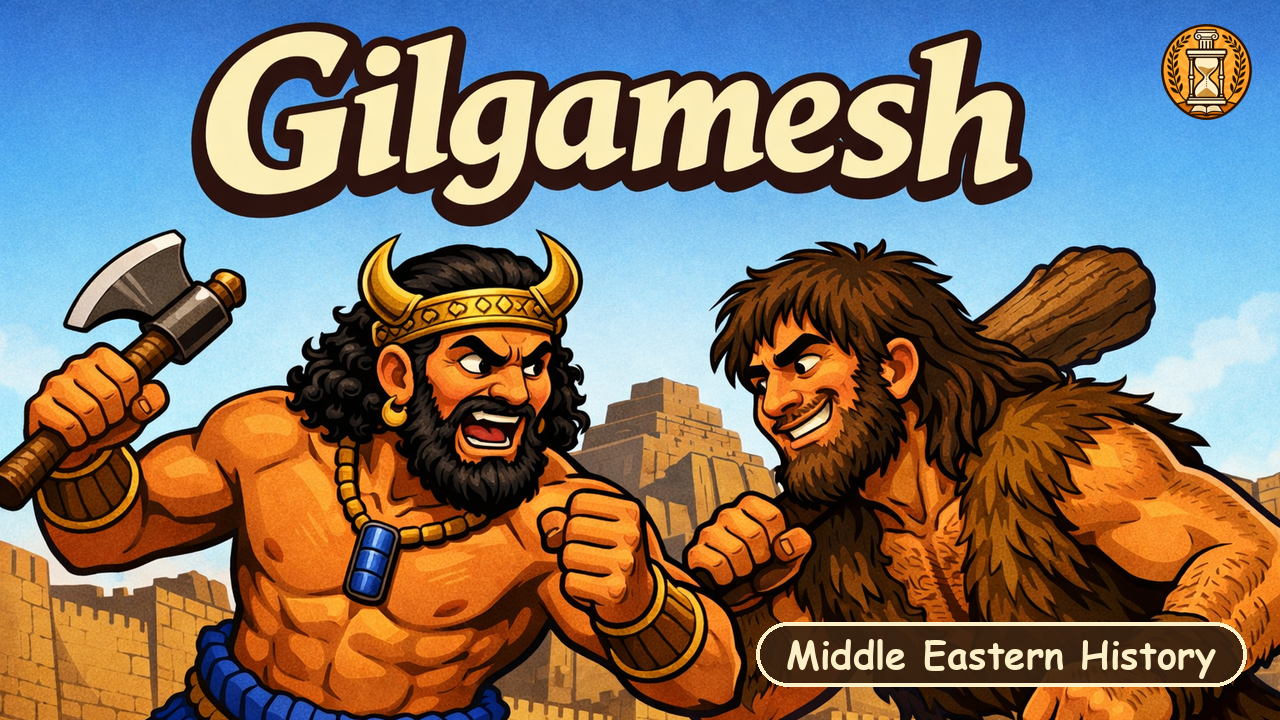
Enkidu arrives in Uruk and the two immediately fight, because of course they do. Then — as with every great friendship in history — they become inseparable. They go on adventures together, including a trip to the Cedar Forest to fight the monster Humbaba, and later a run-in with the goddess Ishtar, who proposes to Gilgamesh and does not take rejection gracefully.
Quick note on Ishtar: she is the goddess of love and war, which means her romantic history is essentially a list of exes who met unfortunate ends. Gilgamesh points this out to her face. It goes badly. This is the first recorded instance of “I’m not saying you have a type, I’m saying your type is dead.”
Grief, and the Worst Road Trip Ever
Then Enkidu dies. And here’s where the epic stops being a monster-slaying adventure and becomes something startlingly modern: Gilgamesh falls apart. He mourns so hard that he refuses to bury the body until it starts to decay. He looks at his friend’s face and understands, for the first time, that he too will die.
So he does what any grieving person with unlimited resources would do: he walks to the ends of the earth looking for immortality. He travels through darkness, meets a scorpion-man pair who guard the mountains (their job description is exactly as weird as it sounds), and eventually finds Utnapishtim — the one human the gods granted eternal life.
The Flood Story (Yes, That Flood Story)
Utnapishtim explains how he got the gig: the gods decided to flood the world, and he was warned to build a boat and save his family and the animals. That’s right — the flood myth predates Noah by centuries. The Sumerians did it first.
He then gives Gilgamesh a consolation prize: a plant that restores youth. Gilgamesh retrieves it. Gilgamesh is triumphant. Gilgamesh then stops at a pool for a rest, and a snake steals the plant and slithers off with it. This is why snakes shed their skin, apparently — and also why humanity doesn’t live forever. The world’s first epic ends with the hero losing the prize to a reptile with better timing.
Gilgamesh goes home. He looks at the walls of Uruk — the city he built, the thing that will outlast him — and accepts that this is what a person leaves behind.
Four thousand years later, we’re still telling stories about friendship and death and the unbearable fact that we all run out of time. Turns out the first myth is still the one we haven’t gotten over.
Chapters
- 0:00 — Introduction
- 0:15 — The Setting
- 0:26 — Gilgamesh oppresses Uruk
- 0:56 — Gods create Enkidu
- 1:14 — Shamhat civilizes Enkidu
- 1:35 — Enkidu learns of Uruk
- 1:46 — On the Move
- 1:51 — Enkidu learns of Uruk
- 2:17 — Cedar Forest expedition
- 3:04 — Ninsun prays for protection
- 3:21 — Dreams at the mountain
- 3:38 — Humbaba slain
- 4:29 — Ishtar proposes, is refused
- 5:10 — Bull of Heaven killed
- 5:46 — Enkidu curses the gate
- 6:24 — Enkidu dies
- 7:05 — Gilgamesh seeks immortality
- 7:30 — Scorpion-Man at Mashu
- 8:15 — Siduri’s advice
- 9:04 — Crossing Waters of Death