Some empires break up over a bad breakup text; the Roman and Persian empires broke up over a really, really bad murder.
The Ultimate “It’s Complicated” Status
By 602 AD, the Roman Empire—now headquartered in Constantinople and speaking Greek, so we call it Byzantine—had been feuding with the Sasanian Persian Empire for centuries. They were the two heavyweight champions of the ancient world, locked in an eternal title match where the prize was basically the entire Middle East. They’d fought, made up, and fought again so many times that their diplomatic relationship was essentially a toxic on-again, off-again romance.
But then things got personal. The Byzantine Emperor Maurice was a decent guy, by imperial standards. He didn’t tax people into poverty and he actually paid his army. Unfortunately, his army decided they’d rather have a guy named Phocas, a centurion who had the leadership skills of a particularly aggressive brick. Phocas murdered Maurice and his sons, then took the throne. It was the ancient world’s most catastrophic performance review.
The Vengeance Tour, Starring Khosrow II
Now, here’s the twist. Maurice had previously helped a Sasanian prince named Khosrow II regain his own throne. Khosrow, to his credit, was a loyal friend. Seeing his buddy Maurice butchered by a glorified thug, Khosrow declared war on the Byzantine Empire. But he didn’t just declare war for vengeance; he declared war with the stated goal of avenging Maurice. It was the sixth-century equivalent of starting a world war over a parking space, but with better armor.
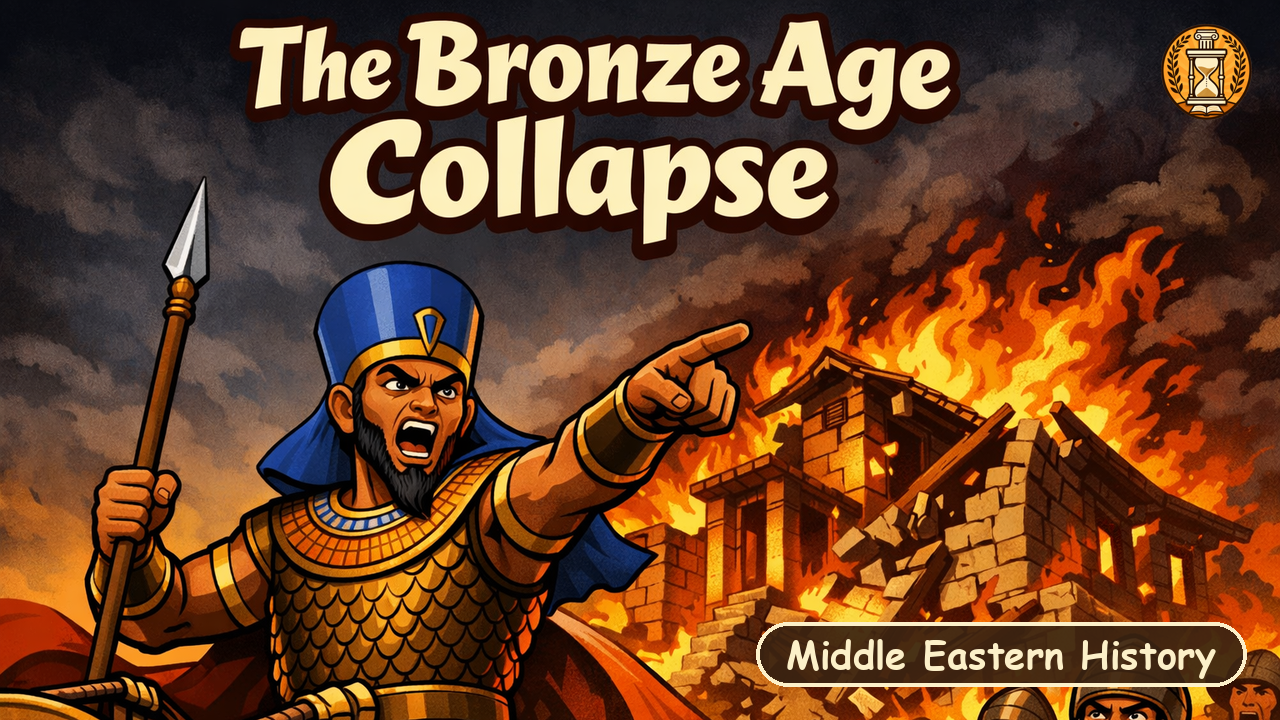
Phocas was, predictably, useless. The Sasanians rolled through Armenia and Syria like a hot knife through butter, mostly because Phocas was too busy executing his own nobles to notice. In 614, the Sasanian general Shahrbaraz—a name that sounds like a fantasy villain and was—captured Jerusalem. The city was sacked, churches burned, and, most devastatingly, the True Cross—the holiest Christian relic—was carted off to Ctesiphon as a trophy. The Byzantine world was in shock. It was like losing the World Cup, the Mona Lisa, and your national anthem all at once.
Heraclius: The Empire Strikes Back
Enter the hero. With Phocas’s reign collapsing, a governor’s son named Heraclius sailed to Constantinople, executed Phocas in a suitably grisly manner, and took the throne in 610. He inherited an empire that was bleeding out, with Persia camping on the shores of the Bosphorus, literally within sight of his palace.
For a decade, Heraclius did nothing. He offered peace terms; Khosrow II, drunk on victory, refused everything. Then, in 622, Heraclius did something shocking: he left his palace, took personal command of the army, and went to war. This was the ancient equivalent of a CEO leaving the boardroom to personally fix the company’s servers. He launched a brilliant counteroffensive in the Caucasus, avoiding pitched battles and instead striking deep into Persian territory, all while Patriarch Sergius rallied the Church and the people back home with religious fervor. It was a masterclass in strategic burglary.
The Battle of Nineveh and the Great Exhaustion
The climax came in 627 AD at the Battle of Nineveh. Heraclius, deep in enemy territory, smashed the Persian army. Khosrow II fled, was deposed by his own nobles, and eventually executed in his own palace. The Sasanian Empire was shattered, and the True Cross was returned to Jerusalem in triumph.
So, the Byzantines won! The Roman Empire was saved! And everyone lived happily ever after… for about twenty years. The truth is, they had both been fighting for so long and so viciously that they had completely exhausted each other. Their treasuries were empty, their armies were depleted, and their cities were rubble. They had spent a century tearing each other apart, leaving a giant, bloody power vacuum.
And into that vacuum stepped a new force from the Arabian Peninsula, united by a new religion: Islam. Within a decade of this “final” victory, the Byzantines lost Syria, Egypt, and North Africa. The Sasanian Empire, meanwhile, was conquered entirely and vanished from the map. The last great war of antiquity didn’t just decide who was stronger; it decided that neither would survive the peace. The winner of the last war with Rome got a front-row seat to its own funeral.
Chapters
- 0:00 — Introduction
- 0:33 — Persian Conquest of Syria
- 0:44 — The Ground
- 0:48 — Persian Conquest of Syria
- 0:58 — Fall of Jerusalem
- 1:52 — On the Move
- 1:56 — Heraclius Seizes Power
- 2:24 — Persian Advance to Chalcedon
- 2:54 — Siege of Alexandria
- 3:21 — Heraclius Plans Counterattack
- 3:38 — Battle of Issus
- 4:00 — Persian Counteroffensive
- 4:31 — Siege of Constantinople Begins
- 4:55 — Naval Victory at Blachernae
- 5:14 — Avars Withdraw
- 5:35 — Heraclius’s Alliance with Turks
- 5:58 — Battle of Nineveh
- 6:22 — Khosrow’s Flight and Death
- 6:46 — Peace Negotiations
- 7:08 — Heraclius’s Triumph